Table of Contents
Introduction
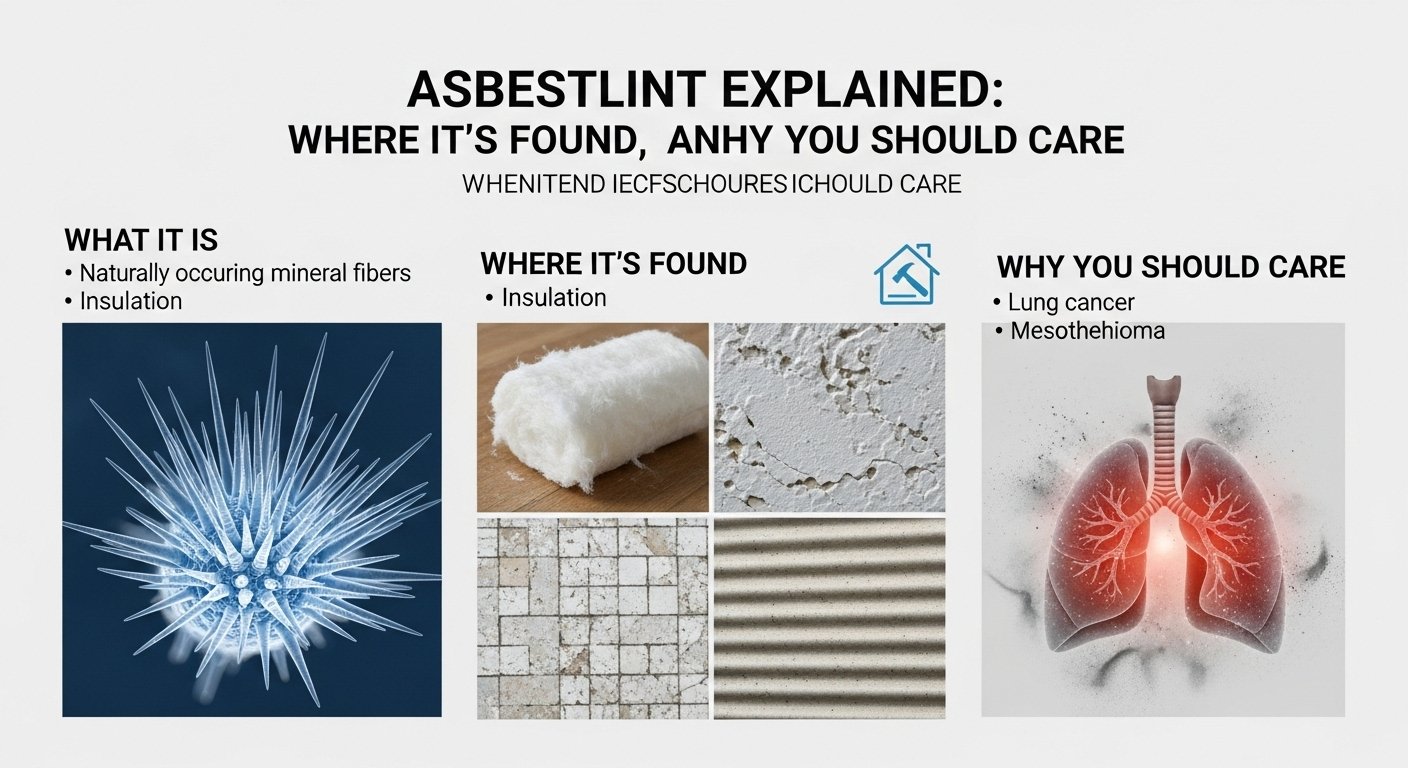
Have you ever heard the word asbestlint and paused? It’s one of those terms that sounds serious—and it is. Asbestlint is a word used to describe tiny fibers or dust-like particles released from asbestos-containing materials that have broken down or been disturbed. These particles can become airborne and invisible to the naked eye, yet they pose serious health risks to anyone who breathes them in.
The word itself may sound like a mix between “asbestos” and “lint,” and that’s sort of what it is—very tiny pieces of asbestos, often clinging to surfaces or floating in air, much like common household lint, but far more dangerous.
In this article, we’re going to explain everything you need to know about asbestlint. We’ll keep it simple, clear, and easy to understand. You’ll learn what it is, where it comes from, how to spot warning signs, and why it’s important to protect your family, co-workers, or even your pets from possible exposure.
So let’s dive into this important topic together. Your health could depend on it.
What Is Asbestlint?
Asbestlint refers to fine, dust-like particles that come from asbestos-containing materials when they break, crack, or erode over time. Unlike big pieces of asbestos, which are easier to identify and manage, asbestlint is invisible in most cases. It floats through the air, settles on surfaces, and can be disturbed again with just the smallest touch.
You might think of it as “asbestos dust.” It’s not a technical term used in every industry, but more of a descriptive word that highlights how sneaky and hard-to-spot these tiny particles really are.
The danger of asbestlint comes from the fact that when these particles are inhaled, they can settle deep in your lungs. Over time, this can cause serious diseases like asbestosis, lung cancer, or mesothelioma. That’s why it’s so important to take it seriously, even if it’s just a little dust on an old pipe or attic floor.
Where Can Asbestlint Be Found?
Asbestlint is most often found in places where older buildings or equipment contain asbestos-based products. Some common places include:
- Insulation in walls, attics, or around old pipes
- Older floor tiles or ceiling tiles
- Roofing shingles or siding
- Cement boards and panels
- Industrial equipment like boilers or furnaces
When these materials age, get damaged, or are removed without proper safety steps, they can release small fibers—yes, the dreaded asbestlint.
Even if you don’t see it, it could be there. That’s why experts often recommend testing any suspect materials before beginning renovations on homes or buildings built before the mid-1980s.
Why Is Asbestlint So Dangerous?
Asbestlint can be extremely harmful to your health. The biggest issue is how small the fibers are. When you breathe them in, they can get trapped deep in your lungs, where your body can’t remove them easily.
Over time, asbestlint exposure can lead to:
- Breathing problems like asbestosis (a scarring of the lungs)
- Lung cancer
- Mesothelioma, a rare but deadly cancer that affects the lining of the lungs or abdomen
- Other diseases related to chronic inflammation
These health issues take years—even decades—to show symptoms. That’s what makes asbestlint so dangerous. People may not even know they’ve been exposed until it’s too late. That’s why prevention is key.
How Does Asbestlint Get Released?
Let’s talk about how asbestlint actually becomes a problem. While asbestos stays safer when it’s sealed or intact (called non-friable), it becomes dangerous when it’s broken up (friable).
Asbestlint is released during:
- Construction work or demolition
- Drilling or cutting into old floors, ceilings, or pipes
- Accidental damage to older insulation or wallboards
- Natural wear and tear over time in old houses or buildings
Even vacuuming or sweeping could kick dust into the air. That’s why asbestlint should only ever be removed or handled by licensed, trained professionals.
What Are the Signs That Asbestlint Might Be Present?
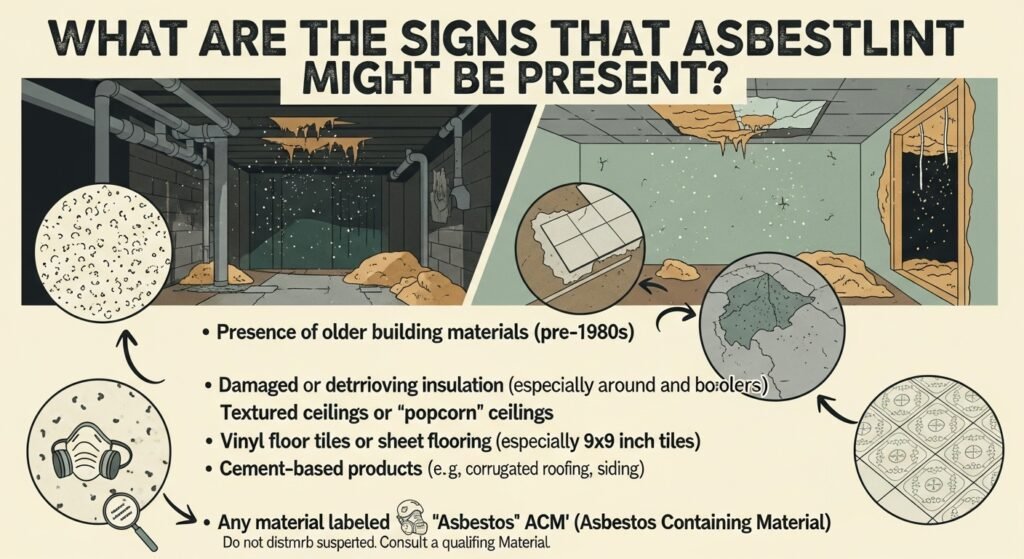
It’s important to know when it’s time to get your home or building checked for potential asbestos risks. While you can’t see asbestlint directly, here are a few warning signs:
- You live or work in a building built before 1980
- Walls, floors, or ceilings look powdery, cracked, or flaking
- You notice fine dust around old piping or insulation
- You or someone in your home has sudden breathing issues
- Cabinets, drywall, or tiles start crumbling with age
These may all be signs that asbestlint could be present, especially if you’re doing any kind of renovation or cleaning in older buildings. When in doubt, always bring in an expert to test the area.
How Can You Protect Yourself From Asbestlint?
Your safety comes first! The best way to avoid asbestlint exposure is to prevent it from spreading.
Here are a few safety steps anyone can follow:
- Don’t disturb old-looking building materials
- Avoid DIY projects in older homes unless you’ve had the area tested first
- Call an asbestos professional if you see worn-out tiles or insulation
- Keep high-risk areas sealed off from kids or pets
- Use HEPA filters in vacuums and air purifiers if you live in an old home
- Wear protective gear if you must enter a potentially unsafe space
Never attempt to remove asbestos materials yourself. The moment they break, they can release harmful asbestlint into the air.
Professional Testing and Removal of Asbestlint
If you suspect asbestlint or other asbestos-containing materials are present in your home, testing is the first step. This is not a DIY task. Handling asbestos without the proper training and gear can be very dangerous.
Licensed asbestos professionals can:
- Inspect buildings to identify any risky materials
- Collect samples safely
- Send them to a lab to test for asbestos content
- Recommend removal or encapsulation (sealing it in safely)
- Fully remove affected materials using special tools, gear, and vacuum systems
This process helps protect you and everyone in the building from exposure. It may cost money, but it’s a small price to pay for the safety of your lungs and life.
Can Asbestlint Travel Through the Air?
Yes! That’s what makes asbestlint so tricky and dangerous. These tiny fibers can float in the air for hours. They’re lightweight, dusty, and nearly impossible to see—making them easy to breathe in without even knowing.
Once disturbed, asbestlint can:
- Travel through ventilation or air ducts
- Stick to clothing or tools
- Settle on furniture or carpets
- Re-enter the air when disturbed again (like cleaning or sweeping)
Because of this, even small exposure can be risky, especially if repeated over time. That’s why it’s so important not to touch or mess with suspicious materials unless you are 100% sure they’re safe.
Asbestlint at Workplaces: What Businesses Need to Know
Older industrial buildings, schools, hospitals, and factories are likely spots where asbestlint might still exist. Business owners have a legal and moral duty to make sure these spaces are safe.
Workplace strategies include:
- Regular inspections by licensed professionals
- Safety training for all employees
- Clear warning signs for restricted areas
- Keeping asbestos records updated
- Providing protective gear and masks for workers
- Using certified abatement teams during renovations
Protecting staff from asbestlint starts with awareness. When workers feel safe, they can do their jobs better and breathe with peace of mind.
What Should Renters Know About Asbestlint?
If you rent your home or apartment, you may wonder if you’re at risk. The truth is, many older rental buildings may still contain asbestos.
Here’s what to do:
- Ask your landlord if any asbestos is present
- Don’t make repairs or cut into walls without permission
- Report any damaged floors, ceilings, or insulation right away
- If you smell or see strange dust, say something
- If you’re not comfortable, request a written inspection report
Landlords are usually responsible for keeping your space safe. But asbestlint can go unnoticed unless you know what to look for.
How Is Asbestlint Different from Regular Dust or Lint?
This is a great question because many people confuse asbestlint with plain-old dust or “fuzz.”
Here’s how they’re different:
- Regular lint is made of fabric or hair. Asbestlint is made of minerals that break into microscopic sharp fibers.
- Dust may cause sneezing or allergies. Asbestlint can cause cancer or lung disease.
- Regular lint can be vacuumed. Asbestlint needs specialists with special filtered vacuums.
In short: one might be slightly annoying—the other is silently dangerous.
If you’re not sure what the dust is made of, it’s better to take no risks and call a professional.
Can Pets Be Affected by Asbestlint?
Yes, your cats and dogs can be harmed by asbestlint, too. Just like people, pets breathe the air around them. If there are tiny asbestos fibers floating around a home, pets are often the first affected. Why?
Because animals—especially dogs—love to sniff around, lie on the floor, or explore places like basements or attics. These are some of the highest-risk areas for asbestlint.
Signs of pet exposure may include breathing problems, coughing, fatigue, or odd behavior. If your home has had renovations and your pet seems “off,” bring it up with your vet.
Protecting your pets starts with protecting your home.
FAQs
1. Is asbestlint the same as asbestos?
Not exactly. Asbestlint refers to the tiny, dust-like form of asbestos that’s released when materials crumble or break down. It’s often more dangerous because it’s harder to detect.
2. Can I clean up asbestlint myself?
No. Trying to clean it yourself can release more fibers. Always call a trained asbestos removal expert.
3. How do I know if my home has asbestos?
Homes built before 1985 may contain asbestos. An inspection and lab test is the only way to be sure.
4. Does asbestos ever “go away” over time?
No. Asbestos doesn’t break down naturally. In fact, it becomes more dangerous as it ages.
5. Can asbestlint make me sick right away?
Usually not. Illnesses caused by asbestos often appear many years after exposure.
6. Are newer homes at risk of asbestlint?
Generally, no. Most homes built after the 1990s don’t use asbestos materials. But always check during renovations, just in case.
Conclusion
Now that you understand what asbestlint is, you can take action to stay safe. Whether you’re a homeowner, renter, worker, or business owner, knowing the risks early makes all the difference.
Even though you can’t always see or smell asbestlint, it’s important to stay alert in any older building or during home projects. Testing, sealing, or removing dangerous materials should always be left to experts. One moment of exposure may not cause instant problems, but over time, the risk builds.
So, stay smart, stay careful, and most of all—don’t ignore the warning signs. Tell others what you’ve learned. You just might protect a loved one.
Have questions about asbestlint? Share your thoughts below, or talk to a certified expert near you. Your health matters.