Table of Contents
Introduction
Ever jammed your pinky or heard a loud pop after falling on your hand? If so, your doctor may mention something called an ulnar gutter splint. It sounds complex—but don’t worry. It’s simply a special splint used to help injuries on the pinky finger side of your hand.
An ulnar gutter splint supports and protects the ring and little fingers, as well as the outer edge of your hand and wrist. It’s most commonly used when someone breaks a bone or sprains a joint in those fingers.
This article will help you understand what an ulnar gutter splint is, when it’s needed, how it works, and how to wear it comfortably. We’ll keep everything easy to follow—even if you know nothing about medical terms.
Let’s explore how this simple splint plays a big role in healing hands and fingers.
When Do You Need an Ulnar Gutter Splint?
Doctors usually suggest an ulnar gutter splint after a specific type of injury—usually on the pinky side (also called the ulnar side) of your hand. It’s often used for:
- Fractures of the fifth metacarpal bone (the bone that connects to your pinky finger)
- Boxer’s fractures (common in the pinky after punching something)
- Dislocations or sprains to the ring or little fingers
- Tendon injuries on the ulnar side
- Post-surgical recovery after finger repair
This splint keeps your injured hand still and protected. It stops the fingers and wrist from moving too much, which allows bones, tendons, and muscles to heal faster.
So if your doctor says you need one, it’s because your hand needs a gentle but strong support during healing.
What Does an Ulnar Gutter Splint Look Like?
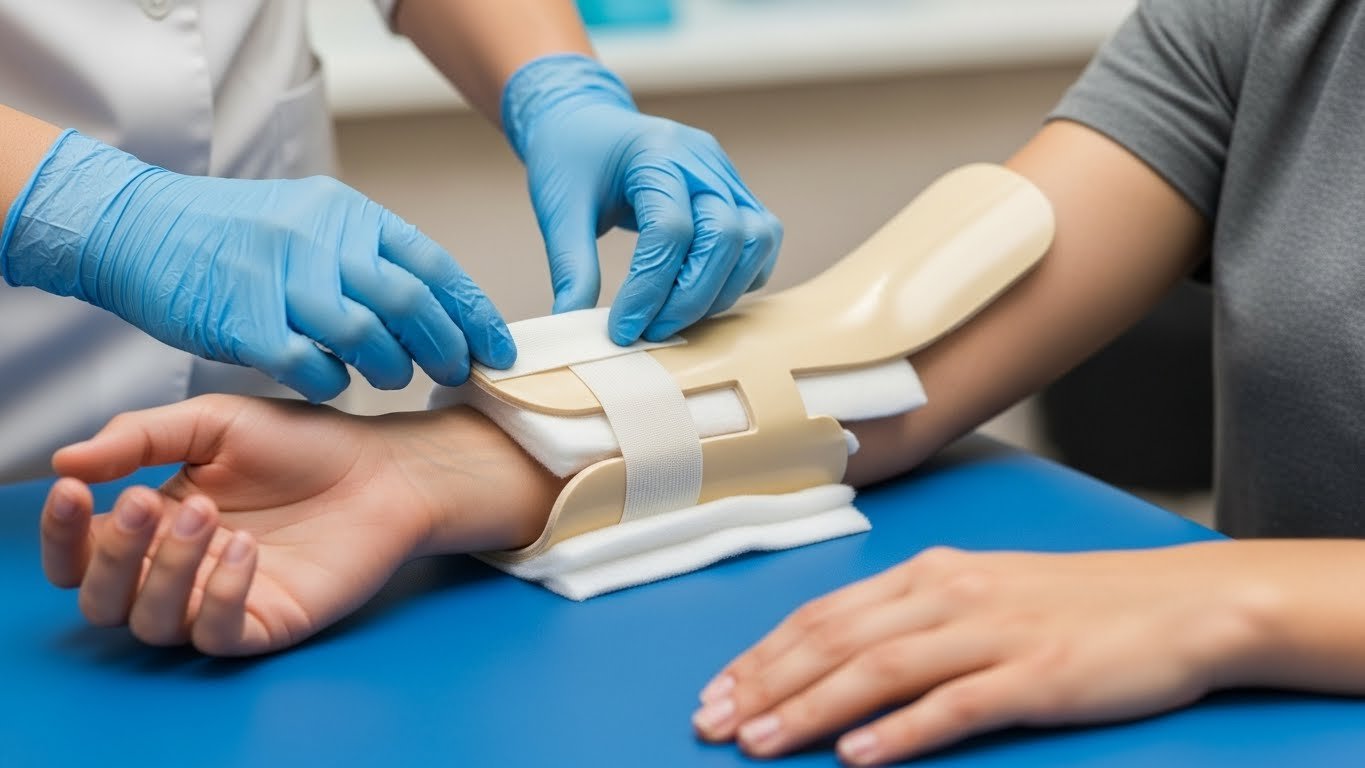
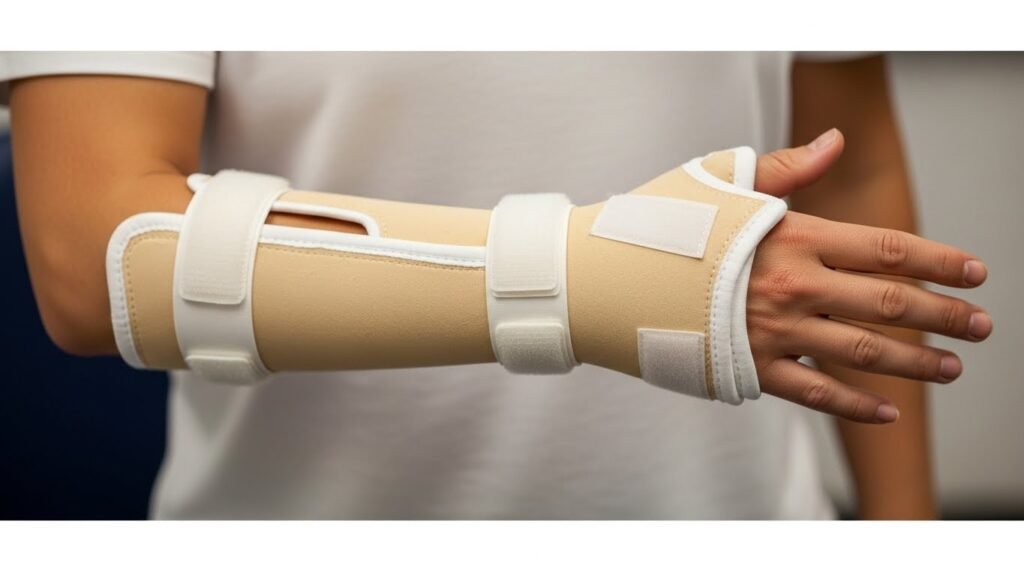
At first glance, an ulnar gutter splint may look like a half-cast or a stiff glove for your hand. But it’s carefully shaped to fit snugly along the outside of your hand, from just below the elbow to the tips of your ring and pinky fingers.
Typically, it bends your wrist slightly and keeps your fingers curled as if you’re gently holding a soft ball. This relaxed, bent position is best for healing because it reduces stress on injured areas.
Some splints are made from hard plastic or fiberglass. Others have a soft, foam-like lining with Velcro straps for easy adjustments.
No matter the style, all ulnar gutter splints are built to keep you stable and comfortable while your hand recovers.
How Does an Ulnar Gutter Splint Help Healing?
Your hand is full of tiny, delicate bones and tendons. If even one is damaged, it can affect how you grip, hold, or move your fingers. That’s where an ulnar gutter splint comes in.
Here’s how it helps:
- Prevents movement that could cause more damage
- Keeps bones in place for proper healing
- Reduces swelling by gently compressing the injury
- Supports tendons and joints so they don’t shift out of alignment
Doctors often say stability is healing’s best friend. The more secure your hand is, the smoother your recovery will be.
Wearing the splint as directed helps your hand avoid long-term stiffness or pain.
Common Injuries Treated with an Ulnar Gutter Splint
Understanding the injuries treated by an ulnar gutter splint can help you know why it matters so much. Here are a few common examples:
Boxer’s fracture: Happens when the fifth metacarpal (pinky bone) breaks after punching something hard.
Finger fractures: Especially when the break is close to a joint or in the last two fingers.
Tendon injuries: If tendons near the outer hand tear or strain, a splint helps protect movement.
Joint dislocations: After popping back a dislocated joint, the splint lets it settle into healing.
Sprains or ligament tears: When your fingers bend too far, ligaments stretch or tear. A splint keeps them from bending again.
These types of injuries are more common than you might think, especially in sports or falls. The splint plays a crucial role in letting everything rest and repair.
How Long Do You Wear an Ulnar Gutter Splint?
This depends on how serious your injury is. For minor fractures or sprains, an ulnar gutter splint may only be needed for two to three weeks. More serious injuries like complex breaks or tendon damage could require four to six weeks or even longer.
Your doctor will update you with X-rays or check-ins to see how your hand is healing. You may also switch from a splint to a full cast or soft brace depending on progress.
Even after stopping the splint, you might have to do hand therapy exercises to regain strength and gentle movement.
Always follow your provider’s advice. Removing your splint too early can mess up the healing process and lead to complications.
Tips to Wear an Ulnar Gutter Splint Comfortably
An ulnar gutter splint isn’t always the most fun thing to wear, especially during daily tasks. But you can make it more comfortable with a few smart tips:
- Keep your hand elevated (especially during early healing) to reduce swelling
- Use a sling if your wrist or arm feels heavy
- Don’t get it wet if it’s made from water-resistant materials (plastic bag method works when showering!)
- Check for tightness or redness—a too-tight splint can reduce blood flow
- Avoid activities that cause pressure like lifting or leaning on your hand
If the splint feels too loose, too painful, or causes numbness, call your doctor or therapist. Your comfort matters during recovery.
Can You Remove the Ulnar Gutter Splint at Home?
You may wonder if you can take off your ulnar gutter splint at home to rest or shower. The answer depends on how your splint is made.
Rigid fiberglass or plaster splints are not meant to be removed by patients. They’re shaped and set by professionals to stay in place.
Soft or Velcro-based splints may be removable, but only if your doctor allows it. In most cases, you’ll be asked to keep it on all day and night except for brief cleaning or skin checks.
Removing your splint early or wearing it incorrectly can delay healing or cause the injury to get worse. So always ask your care provider before making changes.
Taking Care of Skin Under the Splint
Wearing any kind of splint for weeks can affect your skin. With an ulnar gutter splint, it’s important to care for the skin even if you don’t see it much.
Here’s what you can do:
- Check for pressure spots or redness (a mirror helps!)
- Watch for itching—a sign the skin is drying out or irritated
- Don’t use lotions inside the splint as they can trap moisture
- Gently clean your hand during any approved splint removal
- Use clean, breathable bandages if your splint involves wraps
If you start seeing blisters, sores, or feel burning, call your doctor. Skin issues under a splint can grow quickly if left untreated.
Ulnar Gutter Splint vs. Cast – What’s the Difference?
Many people confuse splints and casts. While they both support healing, they’re used a little differently. Let’s compare.
An ulnar gutter splint:
- Is usually only on one side of your arm
- Allows some flexibility and swelling
- Can be adjusted as needed
- Is easier to remove (by your provider)
A cast:
- Completely surrounds the injury
- Offers full protection
- Is rigid and not removable
- Often used after swelling goes down
Doctors often start with a splint and move to a full cast later. Or they may just use the splint for the entire healing period.
Knowing the difference helps you understand your recovery and treatment process better.
What Happens After the Splint is Removed?
Once your ulnar gutter splint comes off, your hand may feel stiff or weak. That’s completely normal. You’ve probably been resting those muscles and joints for a few weeks.
At this point, your doctor may recommend:
- Physical therapy to rebuild strength
- Stretching exercises for flexibility
- Grip tools like stress balls or therapy putty
- Follow-up exams to track your progress
With a little work and patience, your hand will come back stronger than before. Don’t rush the process—healing happens over time. If something doesn’t feel right after the splint is removed, talk to your doctor right away.
FAQs
Can I sleep with an ulnar gutter splint on?
Yes, and in fact, you should. Keeping the splint on while sleeping protects your hand while you rest.
Is it normal to feel itchy under the splint?
Mild itching is normal. But if it gets worse or comes with pain or swelling, call your doctor.
How do I keep the splint clean?
Wipe the outside gently with a moist cloth. Avoid getting the inside wet or using strong cleaners.
Can I drive with an ulnar gutter splint?
It depends on which hand is injured and local driving rules. Always ask your physician for safety advice.
Does the splint hurt when it’s on?
It shouldn’t. Some pressure is normal, but pain or numbness means it’s too tight. Let your provider know.
Will I need hand therapy afterward?
Often yes. Strengthening your fingers, grip, and wrist after wearing a splint helps get everything working well again.
Conclusion
An ulnar gutter splint may seem small, but it plays a big role in healing hand and finger injuries. Whether you’ve had a fracture from a fall or strained a tendon in sports, the splint gives your body the chance to rest and recover properly.
Now you know what an ulnar gutter splint is, why doctors use it, and how to wear it with care. From injury to recovery, following your doctor’s instructions and caring for yourself with patience will make all the difference.
Have you used an ulnar gutter splint before? Still recovering from a hand injury? Share your experience in the comments. You never know—you might help someone else going through the same thing.